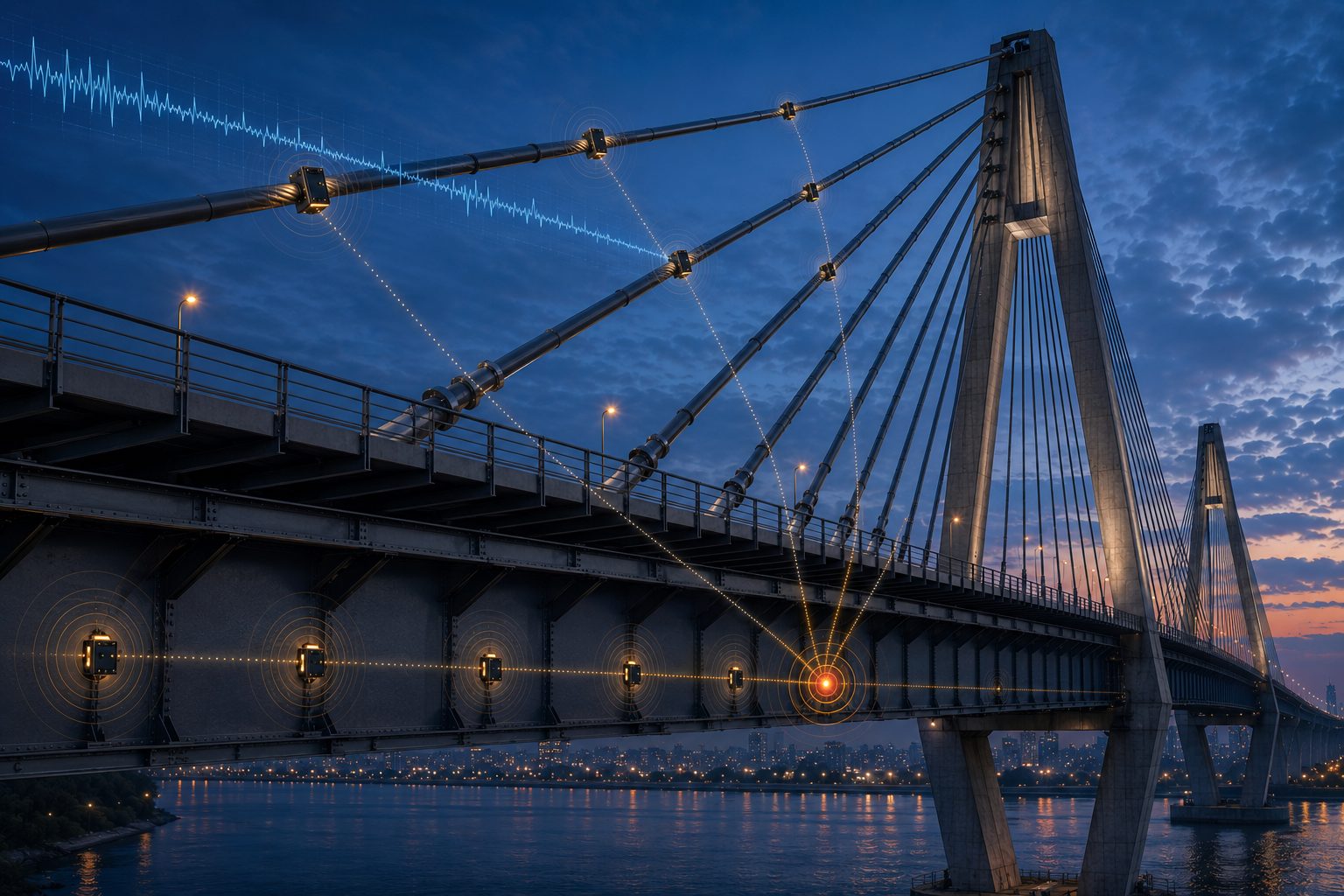
Railway safety often depends on what lies beneath the tracks, where unseen risks can escalate into serious failures. In this blog, you’ll discover how continuous monitoring helps operators detect these hidden threats early, prevent costly disruptions, and keep trains moving safely and reliably.
Hidden Threats Beneath the Tracks
Railway networks are vital arteries of modern transportation, but their safety and reliability can be compromised by forces that are not always visible on the surface. While broken rails or fouled ballast are well-known maintenance issues, some of the most dangerous risks come from below: sinkholes, landslides, and other geohazards that can disrupt service and, in the most severe cases, threaten lives. Understanding how to manage these risks is critical, and continuous monitoring is emerging as a powerful tool to do so.
A key distinction must be made between the frequency of a problem and its severity. Geometry failures, for example, occur relatively often but do not always cause catastrophic outcomes. Sinkholes, on the other hand, are less common yet represent one of the most critical risks in railroad infrastructure. Their sudden collapse can lead to accidents with devastating consequences.
The Limits of Traditional Inspections
For many years, railway operators have relied on traditional inspections and observational methods to detect hazards. Geological risk areas may be checked periodically, and satellite imagery can sometimes provide an additional perspective. Yet these methods are limited in their ability to reveal what is happening beneath the ground before a failure occurs. Without early warning, operators are often left to react only after a problem becomes visible, which usually means higher costs, significant disruptions, and reduced passenger confidence.
This is where continuous monitoring changes the story. Unlike traditional inspections that provide a single snapshot in time, continuous monitoring creates a moving picture of soil and ground behavior. Subtle shifts, such as the early signs of soil decompaction, can be detected before they develop into cavities or landslides. Acting on these early indicators allows teams to intervene proactively by stabilizing the soil, injecting materials such as concrete, and preventing the escalation of issues that would otherwise demand large-scale emergency interventions.
A Medical Analogy: Early Detection Saves Lives
The comparison to medicine is striking. Just as doctors emphasize the importance of early detection in treating serious conditions, continuous monitoring enables railway operators to identify potential failures at their earliest stage. Addressing problems while they are still minor is not only far less disruptive but also considerably less expensive. Industry experience shows that predictive maintenance enabled by monitoring can reduce costs by as much as a factor of five compared to reactive measures taken after a failure.
Despite its benefits, continuous monitoring is not yet widespread. The main hurdle is upfront investment, which can make decision-makers hesitant. Yet this perspective misses the bigger point: without monitoring, operators remain vulnerable to sudden failures that are far more costly and dangerous. Prevention should be seen as a safeguard, like a routine health check-up, that protects both operational budgets and passenger lives.
Moving From Reaction to Prevention
Railway infrastructure will always be subject to natural forces beyond human control. What can be controlled is how operators choose to manage those risks. Traditional inspections provide limited foresight, but continuous monitoring delivers the clarity and lead time needed to act before problems spiral out of control. By shifting from reaction to prevention, the industry can improve safety, maintain reliability, and achieve greater efficiency.
For those responsible for managing railway networks, the question is not whether geohazards will occur, but how prepared they are when they do. Continuous monitoring offers a proven path forward. It protects passengers, ensures service continuity, and reduces costs over the long term.
Ready to keep your trains moving safely and efficiently? Schedule a complimentary consultation to get expert guidance on detecting subsurface risks, improving infrastructure performance, and reducing costly reactive maintenance.